
Why social enterprise matters
WA has a housing crisis, a cost of living crisis, and a workforce that still leaves too many people behind – young people, people experiencing homelessness, survivors of violence. Government and charity alone haven’t solved these problems. Social enterprises offer something different: businesses that generate real revenue by tackling them, creating jobs for people who struggle to find them, delivering services where gaps exist, and putting profits back into WA communities instead of offshore.
There are an estimated 995 social enterprises in this state already doing this work – in construction, hospitality, retail, and more. The question isn’t whether social enterprise works. It’s whether WA is ready to back it properly.
Image: Foundation for Sustainable Health (FISH)
The state of play in WA
Something is shifting across WA. Businesses, educators, funders, and consumers are all moving in the same direction – away from profit-at-any-cost models that extract value and leave, toward enterprises that are rooted here and invested in what happens next. TAFEs and universities are teaching social impact. Accelerators want to back ventures that make a difference and a living. Supply chains are seeking local businesses that give back. Funders are choosing sustainable models over charity. And our research shows WA consumers actively want to spend with businesses doing good.
Since 2019, WASEC has been building the foundations – WA’s only social enterprise directory, the first WA Social Enterprise Awards, and the state’s only Social Impact Incubator. We’re ready to scale. But we need government to come with us.
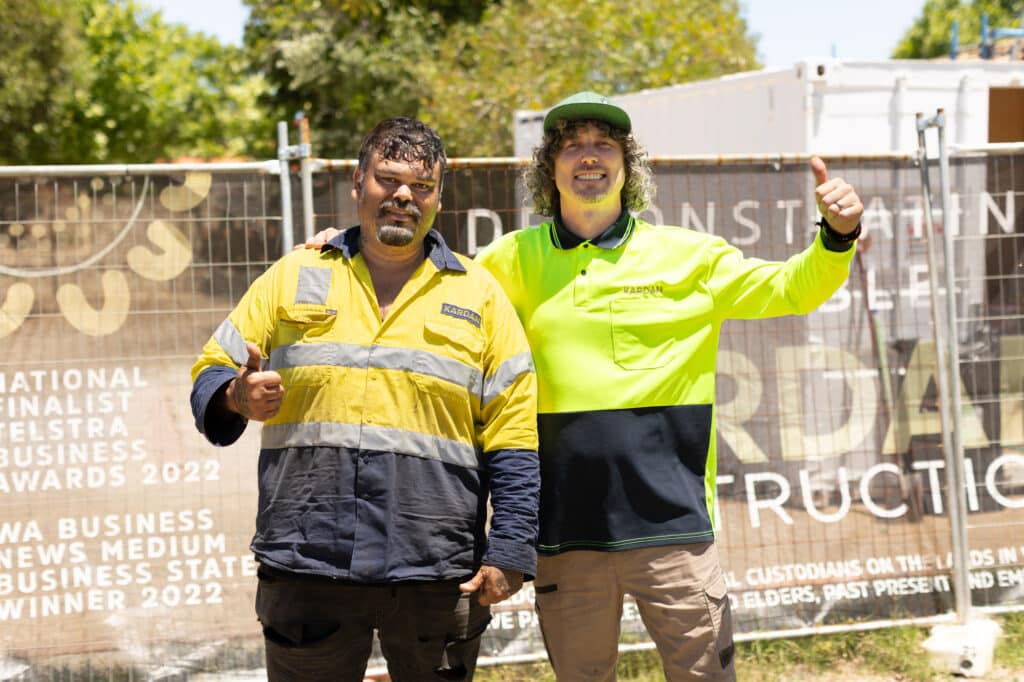
Image: Kardan Construction

Learning from others
Other jurisdictions have already shown what’s possible when government backs social enterprise properly – and the results are hard to ignore.
Queensland invested $80 million through its Social Entrepreneurs Fund, established an Office of Social Impact, and funds the Queensland Social Enterprise Council as peak body to the tune of $1.6 million annually. Victoria committed $2.9 million to a Social Enterprise Strategy and has directed millions in government procurement toward certified social enterprises. In the UK, more than 100,000 social enterprises generate £78 billion annually, embedded in government procurement and commissioning – and in 2025, the government launched an Office for the Impact Economy.
WA doesn’t need to start from scratch. The models exist, the evidence is there, and the returns – more jobs, stronger communities, profits that stay here – speak for themselves.
What WASEC would like see
1. Social Procurement Policy
The groundwork is already done. A social procurement team exists within the Department of Finance, and much of the framework development is complete. What’s missing is formal approval and budget to make it policy.
We’re asking for two things: that “social enterprise” be explicitly included in WA’s social procurement framework, and that the framework be mandated as policy rather than guidance. Voluntary frameworks don’t move markets. Mandatory ones do.
The evidence is close to home. WA’s Aboriginal Procurement Policy, introduced in 2018, has awarded over $1 billion in contracts to Aboriginal businesses, with contracts nearly doubling between 2018-19 and 2022-23. Nirrumbuk alone grew from 80 to 215 employees as a direct result. A mandatory framework with clear targets drives real outcomes – for businesses, for workers, and for the state.

2. A Treasury Mandate for Social Enterprise
We’re calling on Treasury to take explicit responsibility for social enterprise as an economic lever. Enterprises that create jobs, reduce welfare dependency, and deliver services that would otherwise fall to government represent significant fiscal value – value that currently goes unmeasured and unsupported.
A formal framework that accounts for social return, paired with procurement and investment signals that make it easier for government to buy from and back enterprises doing this work, would be a strong start.

3. Investment in the Sector
WA has no dedicated funding for social enterprise – to start them, grow them, or scale what’s already working. This is the most significant gap in the system.
Several WASEC members are currently turning people away from employment programs – not because the need isn’t there, but because they lack the capacity to expand. These are proven models with communities ready to benefit from them.
The opportunity is significant. Take the $14.8 million currently invested in crisis accommodation for women escaping violence – essential support that social enterprise can build on. Employment programs, skills training, and pathways into the workforce are what help women achieve lasting financial independence. That’s a social outcome and a fiscal one.
A dedicated investment fund – to seed new enterprises, support growth, and scale what works – would unlock that potential. Queensland and Victoria have demonstrated what’s possible. WA is ready for the same.